

Increasing Climate Change Resilience in Remote Coastal Communities of Macuata and Cakaudrove ProvinceEuropean Union | Fiji | 2020–2024
Increasing Climate Change Resilience in Remote Coastal Communities of Macuata and Cakaudrove Province(ICRBE)
Between 2020 and 2024, C3 Fiji implemented a European Union-funded programme to strengthen climate resilience across 15 remote coastal communities in Macuata and Cakaudrove Provinces, northern Fiji.
The €444,848 programme combined terrestrial and marine ecosystem restoration, community-based resource management, environmental education and practical climate adaptation measures.
Working alongside local communities, traditional leaders and government ministries, C3 Fiji supported the restoration of degraded native forests and mangroves, the establishment of community-managed conservation areas and the training of local resource managers.
A central feature of the project was its emphasis on community ownership. By integrating scientific knowledge with customary resource management practices, the programme aimed to equip communities with the skills and structures needed to protect their natural resources beyond the project period.
Activities
Native Forest Restoration and Protection
Worked with communities and Fiji’s Ministry of Forestry to establish native tree nurseries, identify degraded forest areas and restore indigenous vegetation. Activities included seedling production, planting, survival monitoring, community forest reserve establishment and training local Forest Wardens.
Mangrove Restoration and Coastal Conservation
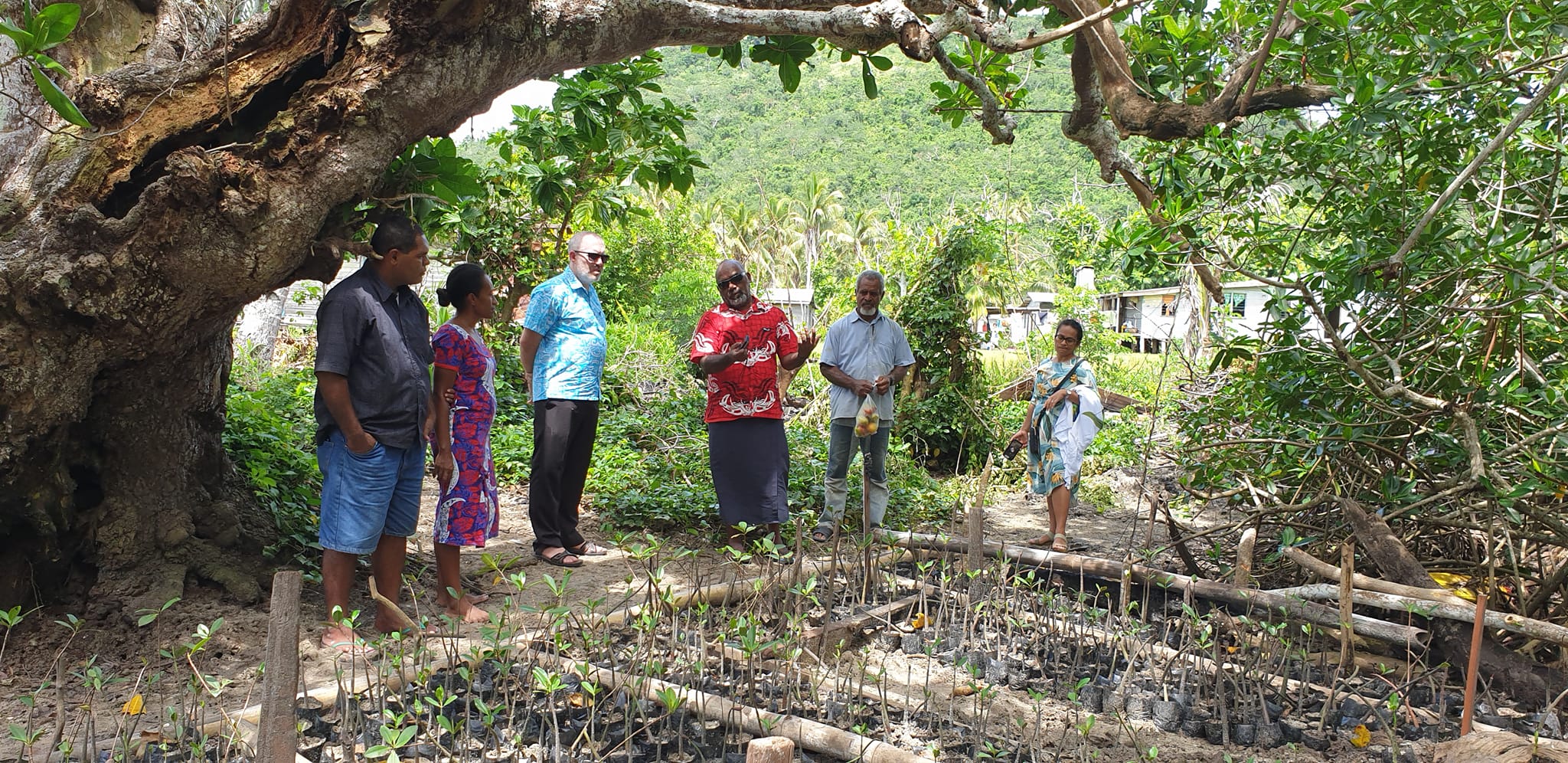
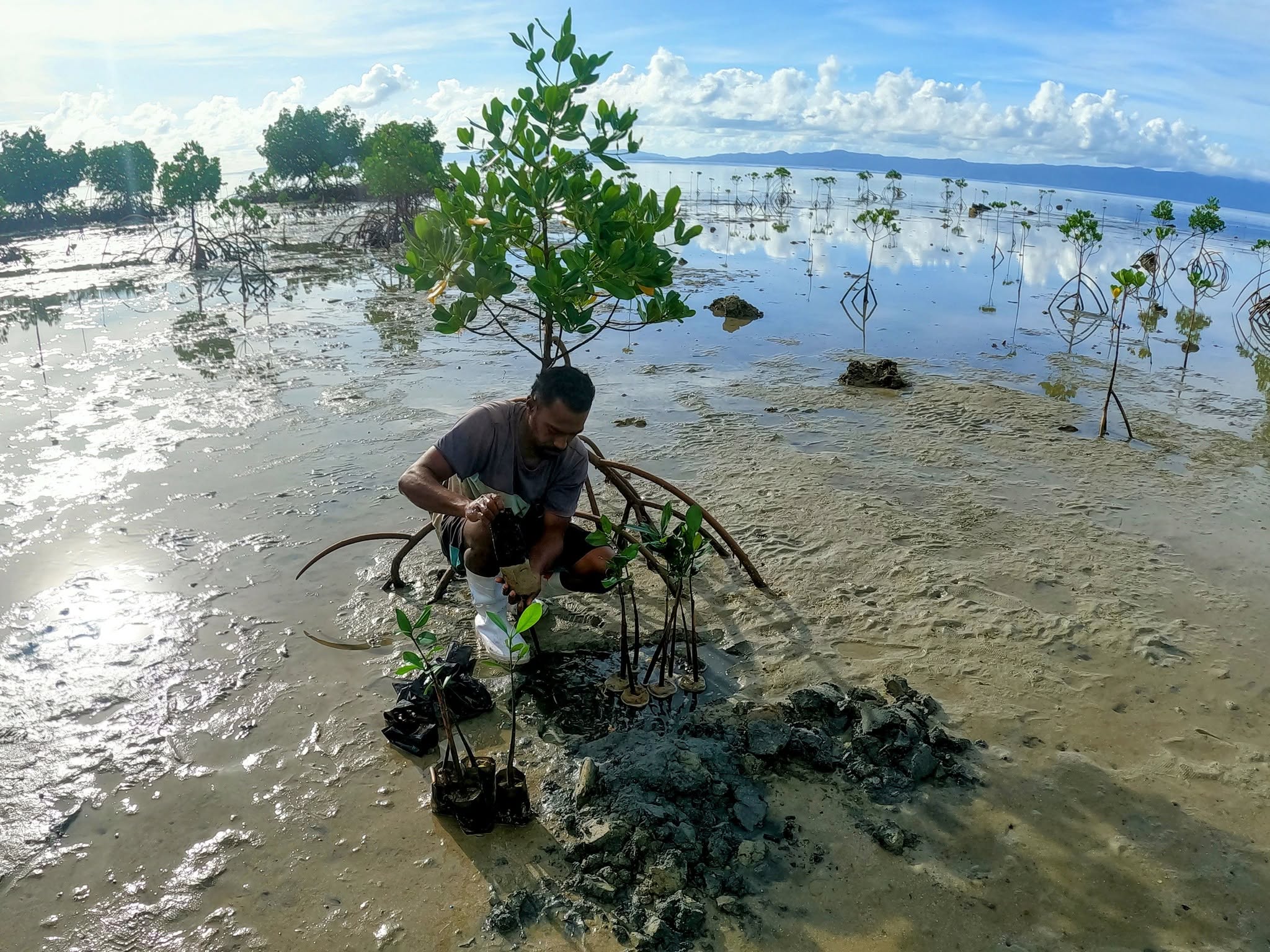
Supported community-led mangrove restoration through nursery development, propagule planting and regular monitoring. Communities received training in mangrove ecology, conservation and restoration techniques, helping strengthen the protection of coastal habitats and blue carbon ecosystems.
Locally Managed Marine Areas
Supported the establishment and strengthening of Locally Managed Marine Areas (LMMAs), working with traditional resource owners to map marine areas, prepare management plans and develop locally appropriate conservation measures. Fish Warden training strengthened community capacity to monitor fisheries and address illegal or unsustainable fishing practices.
Reef Rangers and Environmental Education
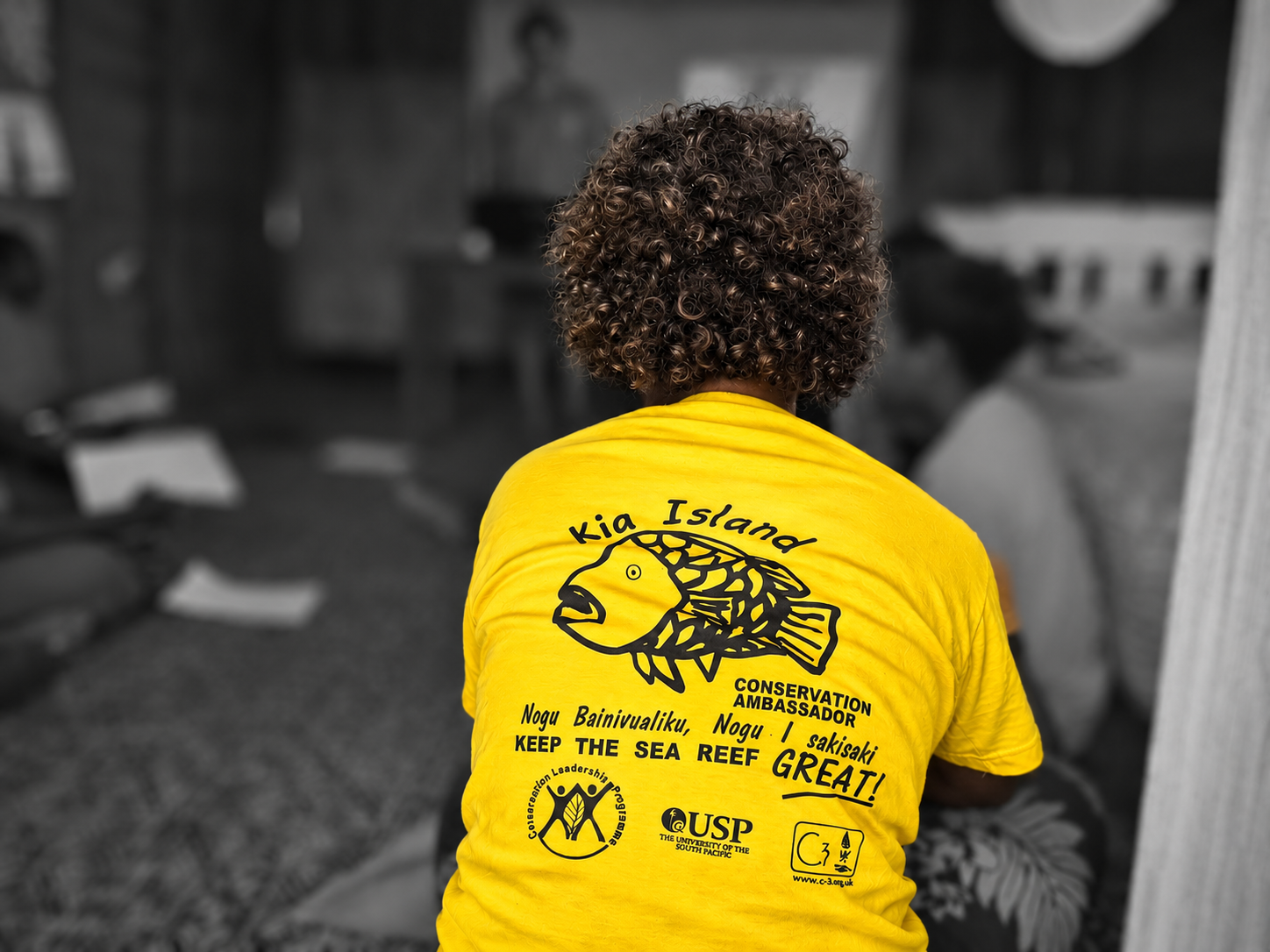
Expanded C3 Fiji’s Reef Rangers programme to engage young people in climate change awareness, biodiversity conservation and practical environmental action. Community-based activities, training sessions and outreach events encouraged youth participation and helped develop a new generation of local conservation leaders.
Fuel-Efficient Cooking Technologies
Introduced locally appropriate fuel-efficient cooking stoves to reduce household dependence on firewood. Women received practical training in stove assembly, operation and maintenance, supporting more efficient cooking practices and reducing pressure on native forests.
Community Engagement and Capacity Building
Delivered awareness events, consultations and practical training in collaboration with communities, provincial authorities and government ministries. Activities combined local knowledge, technical expertise and participatory decision-making to strengthen community stewardship of marine and terrestrial ecosystems.
Key Results
15 coastal communities supported
The programme worked across Macuata and Cakaudrove Provinces, strengthening community participation in conservation and climate adaptation.
23,000 indigenous trees planted
Native tree restoration covered approximately 28 hectares across community sites. Monitoring recorded 12,181 surviving indigenous trees, representing approximately 53% survival. An additional 1,500 coconut seedlings were planted.
10,355 mangroves planted
Mangrove restoration activities covered approximately eight hectares across nine planting sites, with 7,326 surviving plants recorded — a 71% survival rate.
11 community-managed forest reserves established
Participatory mapping, management planning and local governance arrangements supported the establishment of forest reserves, with 23 Forest Wardens trained to support their protection.
8 Locally Managed Marine Areas established
Community-led marine conservation areas were established with management plans developed through consultations with traditional resource owners and local stakeholders.
45 Fish Wardens trained
Training delivered in collaboration with government partners strengthened local capacity for fisheries monitoring, resource protection and enforcement.
1,582 young people recruited as Reef Rangers
The Reef Rangers programme expanded across 45 communities and two schools, engaging young people in environmental education and conservation activities.
41 community outreach events delivered
Awareness activities addressed climate change, biodiversity conservation, ecosystem services and sustainable natural resource management.
233 women trained in fuel-efficient stove technology
Women received practical training in assembling, operating and maintaining fuel-efficient cooking stoves, supporting household adaptation and reduced dependence on firewood.
Independant Final Evaluation
An independent final evaluation conducted by Pacific Climate Consulting assessed the project’s relevance, effectiveness, impact, sustainability and integration of gender equality.
The evaluation recognised the programme’s strong community-led approach and its contribution to local conservation capacity, environmental awareness and the protection of natural resources.
It highlighted the importance of working through existing community structures, particularly traditional leaders, community liaison officers and local resource-management committees. These relationships helped build community ownership and strengthen the acceptance of conservation activities.
The evaluation also recognised C3 Fiji’s ability to adapt project delivery in response to COVID-19 restrictions, tropical cyclones and administrative delays, including shifting environmental education activities from schools into communities.
Close collaboration with government ministries and provincial authorities was identified as a particular strength, alongside the project’s emphasis on inclusive participation and practical capacity building.
The evaluation concluded that the programme offered valuable lessons for community-led climate adaptation and conservation initiatives elsewhere in the Pacific.
Lasting Impact
Building Community Ownership
The establishment of marine and forest management areas, together with the training of Fish Wardens, Forest Wardens and community representatives, has strengthened local structures for managing natural resources.
By working within customary governance systems and involving resource owners in planning and decision-making, the programme established a foundation for continued community stewardship.
Restoring Forests and Coastal Ecosystems
The restoration of native trees and mangroves has helped rehabilitate degraded habitats while developing community experience in nursery management, planting and ecological monitoring.
Continued maintenance and monitoring remain important to securing longer-term ecological benefits, particularly where planting success was affected by extreme weather and competing land uses.
Investing in the Next Generation
The expansion of Reef Rangers has created opportunities for young people to participate directly in conservation and climate adaptation. These experiences help develop local environmental knowledge and leadership that can extend beyond individual projects.
Continuing Conservation Beyond EU Funding
An important legacy of the EU programme was the continuation of conservation work through subsequent initiatives.
The Kiwa Initiative built on existing relationships and restoration activities in northern Vanua Levu, particularly in Raviravi, Naividamu and Qaranivai, allowing communities to further strengthen mangrove conservation, locally managed marine areas and nature-based approaches to climate adaptation.
This continuity demonstrates the value of sustained partnerships and long-term engagement with communities, rather than isolated short-term interventions.
Contact
C3 FijiFlat 3, Lot 7, Gajraj Street, Naodamu, Labasa
C3 Fiji (Community Centred Conservation (Fiji) Limited), in accordance with the Companies Act, is registered as a non-profit organization in Fiji under the Registrar of Companies with Company Registration No. RCBS2014G3314.